


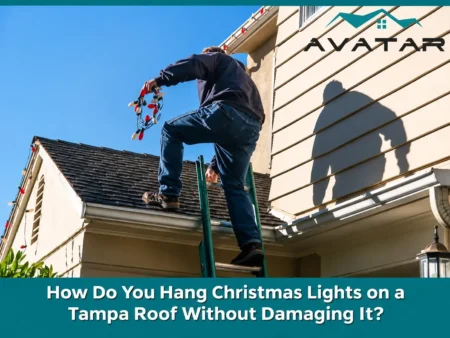
Want to hang Christmas lights on a roof without damaging it? In Tampa, the answer depends on three things: your roof type, the right clips, and staying off the roof surface as much as you can. Our mild winters make December decorating easy. But Tampa’s unique climate brings humidity, strong sun, and gusty cold fronts that change how you should do it. Here’s the same advice we give our own neighbors.
Can Holiday Decorations Actually Damage Your Roof?
Yes. Most holiday roof damage comes from four things: nails or staples that punch holes in roofing, foot traffic that cracks shingles and tiles, heavy inflatables or props that press on the surface, and clips that pry up sealed shingle tabs or tile edges. Use non-penetrating clips, work from a ladder, and keep weight off the roof.
Why Tampa Roofs Need a Different Approach Than Northern Roofs
Most decorating advice online is written for snowy places. Up north, people worry about ice and snow load. Here in Tampa Bay, the problems look different.
No Snow, but Humidity, Algae, and Gusty Cold Fronts
Our humidity feeds algae, often a type called Gloeocapsa magma, that leaves dark streaks on shingles and tile. Those streaks can hide soft spots or trapped moisture. Then December and January cold fronts can push gusty winds across the bay. A loose light strand or rooftop reindeer can whip around and scrape your roof all night.
Securing Inflatables and Props Before a Cold Front
Don’t tie inflatables or large props to your roof. Tether them to ground stakes in the yard instead. Stake more than one side so the display can’t tip over or blow into the house. Keep an eye on the forecast in December and January. If a windy front is on the way, deflate your inflatables or take them down until it passes.
UV Brittle Shingle Tabs and Aging Sealant Strips
Florida sun is hard on asphalt shingles. Over time, the tabs get brittle, and the sealant strip that holds each tab down can weaken. If you force a clip under an old tab, it may crack or lose its seal. That leaves the shingle open to wind lift during the next storm.
How to Hang Lights by Roof Type
This is where most homeowners go wrong. Each roofing material needs its own method.
Asphalt Shingle Roofs
Use plastic shingle tab clips that slide gently under the bottom edge of a shingle. If a tab is firmly sealed down, don’t pry it up. Use gutter clips or drip edge clips instead. All-in-one plastic clips are a handy choice because they fit shingle edges and gutters, so one type of clip works around the whole house. Space them about 12 inches apart. That keeps the strand straight and stops it from sagging or flapping in the wind. Avoid walking on shingles in the afternoon when they’re hot and soft, or on older roofs where the granules are wearing thin. Hot shingles scuff easily, and brittle ones snap.
Clay and Concrete Tile Roofs
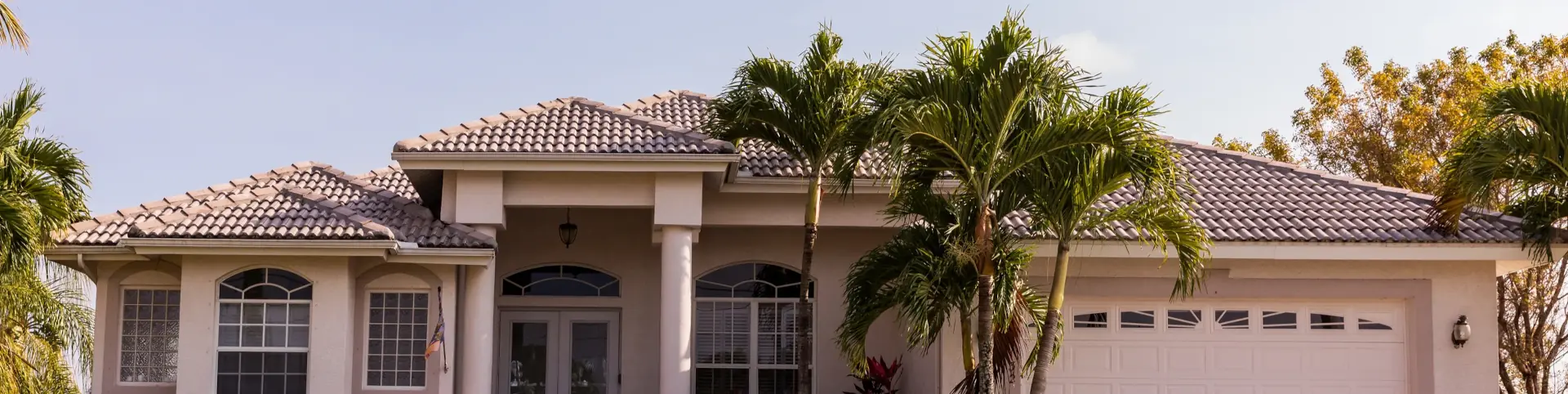
Tile is common in South Tampa, Westchase, and many newer master-planned communities. It stands up well to weather, but it can crack under a person’s weight. Please don’t walk on it. Hang lights along the eaves, fascia, or gutters using clips made for those spots. Barrel tile and flat tile also need different clip styles. Barrel tile has a curved shape, so look for clips made to fit that curve, while flat tile works with clips built for flat edges. If you want lights on the ridge, hire a pro who knows where to step. Keep props and extension cords off the tile surface.
Metal Roofs
Metal roofs handle decorations well, but the method matters. Choose magnetic clips for steel panels or non-penetrating seam clips for standing seam roofs. Skip metal hooks that can scratch the coating, since scratches can lead to rust. Metal is also slippery. Morning dew is common here, so wait until the roof is fully dry, or better yet, stay on the ladder.
Flat or Low Slope Roofs
Many Tampa homes have flat or low slope sections over porches, lanais, or additions. These roofs use a membrane that can tear or puncture. Don’t set weighted props, sandbags, or inflatable bases directly on the surface. Run cords along the edge, and keep anything sharp off the membrane.
What Should You Never Use to Hang Lights?
- Nails, staples, or screws. Every hole is a future leak.
- Adhesive hooks on shingles. They pull off granules and leave residue behind.
- Metal clips that scratch tile glaze or metal roof coatings.
- Cords pinched under flashing. This can bend the flashing and let water in.
- Vents, pipes, or satellite mounts as anchor points for lights.
Ladder and Roof Safety Checklist
Many holiday injuries happen on the ladder, not the roof. Before you climb, run through this list:
- Set your ladder at a safe angle, about one foot out for every four feet up.
- Keep three points of contact at all times.
- Have a spotter hold the base.
- Stay off the roof when it’s wet from dew or rain.
- Keep ladders and light strands well away from power lines.
- Plug outdoor lights into GFCI outlets.
- Use extension cords that are rated for outdoor use.
- Don’t overload circuits. Spread your lights across more than one outlet.
- Use LED lights. They run cooler and use less energy.
Pre-Decorating Roof Check: What to Look For Before You Climb
Take a few minutes to look over your roof from the ground or the ladder. Watch for:
- Loose, curled, or cracked shingles
- Cracked or slipped tiles
- Dark algae streaks or moss
- Gutters clogged with leaves and grit
- A loose or bent drip edge
If you spot problems, fix them before you hang anything. Clipping lights onto a damaged roof only makes things worse. Our roof maintenance tips cover simple ways to keep your roof in good shape all year.
Taking Decorations Down Without Causing Damage
Taking lights down can cause as much damage as putting them up. Go slowly and follow these steps:
- Remove each clip by hand. Never yank a strand to pop clips loose.
- Coil lights as you go so they don’t drag across shingles or tile.
- Check gutters for leftover clips, bulbs, and debris.
- Walk the yard and look up for lifted shingle tabs or shifted tiles.
HOA and City Rules in Tampa Neighborhoods
Many Hillsborough County subdivisions, from New Tampa to Brandon, have HOA covenants. Some set dates for when decorations can go up and come down. Others limit lighting, inflatables, or anything attached to the roof. Read your HOA documents before you buy a giant rooftop display. If you don’t have an HOA and have questions, check with your city or county.
Worried about your roof warranty? Rules vary, so check your manufacturer or installer terms before you attach anything to your roof.
When to Call a Professional Roofer
Call a roofer if you notice any of these after the holidays: shingles that won’t lie flat, cracked tiles, new leaks or ceiling stains, granules piling up in your gutters, or flashing that looks bent. Older roofs need extra care, since they’re more likely to crack during decorating.
If you’d rather skip the ladder altogether, hire a professional light installer. Choose one who carries insurance and uses non-penetrating clips, never nails, staples, or screws.
Right after the holidays is a smart time for a checkup. It gives you time to make repairs before spring rains and hurricane season. Learn more about the benefits of professional roof inspections, or read our general Christmas roof decoration safety tips. If you’d like a pro to take a look, Avatar Roofing offers roof inspections, repairs, and replacements for homes and businesses across the Tampa Bay area.
Picture Credit: iStock