


Wondering how to prepare your roof for spring in Tampa? Start now, while the weather is still fairly dry. At Avatar Roofing, we tell homeowners that spring is the best window for roof maintenance. March through May is usually the tail end of our dry season. The summer rainy season usually arrives in late May or June, and hurricane season starts June 1. If your roof has a weak spot, those daily afternoon storms will find it. This guide gives you a simple spring roof checklist. It also covers what you can safely check yourself and when to call a licensed roofer.
Why Spring Is the Best Time for Roof Prep in Tampa
What Tampa’s Spring Weather Actually Looks Like
Tampa’s spring weather brings warm days, plenty of sun, and less rain than summer. That makes it easy to forget about the roof. But spring cold fronts and squall lines can still bring gusty winds, heavy downpours, and the occasional hail. Tampa Bay is also one of the most lightning-active areas in the country, and the National Weather Service tracks how often spring storms and summer thunderstorms hit our area.
Our winters are mild, so wear and tear looks different here than up north. Instead of ice and snow, Tampa roofs take a beating from winter cold fronts, wind, and the past year’s storms. Add strong UV rays and summer heat, and shingles and sealants slowly break down. Left alone, those small problems can turn into the roofing issues we see every summer, like leaks, rot, and mold.
The Clock Starts June 1 (Hurricane Season)
Atlantic hurricane season runs from June 1 through November 30. Once a storm is in the forecast, it’s too late to fix loose shingles, cracked tiles, or worn flashing. Spring gives you time to find these problems and repair them on your schedule. It also helps you beat the summer rush, when roofers get busy with storm calls.
How to Prepare Your Roof for Spring in Tampa: A Simple Checklist
Work through these steps in March or April. Most of them take an afternoon, and they can save you from a surprise leak in July.
Clean Gutters and Downspouts After Oak Leaf Drop
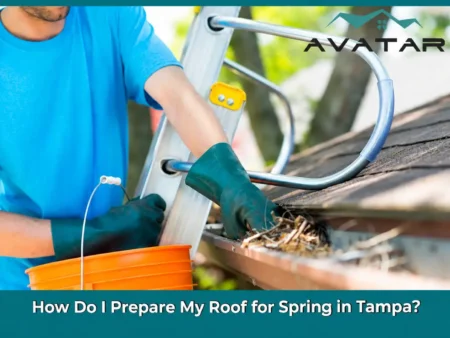
Tampa’s live oaks and laurel oaks drop a heavy load of leaves and pollen in late winter and spring. In neighborhoods like South Tampa, Seminole Heights, Carrollwood, and Brandon, that debris piles up in gutters, downspouts, and roof valleys. Clogged gutters push water back under the roof edge and dump it next to your foundation. Clear them out once the leaf drop slows down, then flush the downspouts with a hose.
Check for Missing, Lifted, or Cracked Shingles and Tiles
From the ground, use binoculars to scan for missing, curled, or lifted shingles. Lots of granules in your gutters can also mean your shingles are wearing out. On concrete or clay tile roofs, look for cracked, slipped, or broken tiles. The tile sheds water, but the underlayment beneath it does the real waterproofing. A broken tile leaves that layer open to sun and rain. On metal roofs, look for loose screws or panels.
Inspect Flashing, Vents, and Skylight Seals
Flashing is the metal that seals the joints around chimneys, walls, vents, and skylights. Florida heat dries out the sealant around it until it cracks. Rubber pipe boots around plumbing vents also split over time. These spots cause a big share of the leaks we repair. If you see rusted, bent, or lifted flashing, have a roofer reseal or replace it.
Look for Leaks in the Attic and Ceilings
Grab a flashlight and check your attic on a bright day. Look for water stains on the wood, damp or matted insulation, mold, or a musty smell. Daylight coming through the roof deck is a red flag. Inside the house, check ceilings and walls for brown rings or bubbling paint, especially near corners and light fixtures.
Check Attic Ventilation for Humidity Control
Tampa’s humidity never really takes a break, and a poorly vented attic traps hot, moist air. Over time, that can rot the roof deck, warp shingles from below, and raise your cooling bills. Make sure insulation isn’t blocking your soffit vents and that ridge or gable vents are clear. If your attic feels like a sauna or you spot condensation, ask a roofer to check the airflow.
Treat Algae and Mold Streaks
Those black streaks on so many Tampa roofs are usually an algae called Gloeocapsa magma. It loves heat and humidity and often shows up first on shaded or north-facing slopes. It holds moisture and can slowly wear down shingles. Don’t pressure wash a shingle roof, because it strips the granules. A gentle, roof-safe cleaning works better. Zinc or copper strips near the ridge and algae-resistant shingles help keep streaks from coming back.
Trim Overhanging Branches
Branches over your roof scrape shingles, drop leaves into valleys, and give squirrels and rats a path inside. In a strong storm, a weak limb can snap and punch a hole in the roof. Trim limbs back so they stay well clear of the roofline. For large trees or branches near power lines, call a licensed tree service.
What Can I Do Myself vs. What Needs a Roofer?
Safety comes first. We don’t recommend climbing onto your roof, especially a steep or tile roof, since tiles can crack under your feet. Stick to what you can check from the ground, the attic, and a sturdy ladder at the gutters.
- Safe to do yourself: scanning the roof with binoculars, checking the attic and ceilings, clearing gutters from a ladder, and keeping attic vents clear.
- Best left to a roofer: replacing shingles or tiles, resealing flashing and pipe boots, fixing active leaks, cleaning the roof, and anything that means walking on it.
Not sure what you’re looking at? Snap a few photos from the ground and send them to a roofer. A quick look can tell you whether it’s a small fix or something bigger.
Should I Get a Professional Roof Inspection Before Hurricane Season?
Yes, especially if your roof is getting older or came through a rough storm season. We suggest an inspection at least once a year and after any major storm. A professional inspection catches what you can’t see from the ground, like soft decking, failing underlayment, and worn flashing.
Inspections, Insurance, and Wind Mitigation
Many Florida insurers look closely at roof age and condition when they write or renew a policy. A recent inspection gives you a clear record of where your roof stands. You may also want a wind mitigation inspection. It checks features like how the roof deck is attached and how the roof connects to the walls, which can lower your windstorm premium. Ask your agent what your carrier requires.
How to Choose a Roofing Company in Tampa
When you search for the best roofer near you, start with the basics. Florida requires roofing contractors to hold a state license. You can verify one in a few minutes through the Florida DBPR at myfloridalicense.com. For more pointers, read our tips for selecting a roofing company. Then look for:
- Proof of liability and workers’ comp insurance
- Strong reviews from Tampa Bay homeowners
- Clear, written estimates with no pressure to sign on the spot
- Experience with shingle, tile, and metal roofs
- A local team that knows how Tampa’s heat, humidity, and storms affect roofs
Schedule Your Spring Roof Inspection With Avatar Roofing
Learning how to prepare your roof for spring in Tampa comes down to a few simple habits. Clear the gutters, check the attic, watch for damaged shingles or tiles, and fix small problems before the rain and wind arrive. We at Avatar Roofing know Tampa weather and the roofs it’s hard on. Whether you need a spring inspection, a repair, or a second opinion on something you spotted from the ground, our team is ready to help. Reach out today and get your roof ready before June 1.
Picture Credit: iStock