


If you live anywhere along the Florida Gulf Coast, you already know the sky can turn ugly fast. One of the biggest questions we hear from folks here in Tampa Bay is simple: what weather causes the most roof damage? The short answer is heavy rain, high winds, hail, and flying debris. But there’s more to it than that, and knowing the signs can save you thousands of dollars down the road. Roof damage from weather is the number one reason homeowners in our area call for repairs, and most of that damage starts small before it turns into a big mess.
At Avatar Roofing here in Tampa, FL, we’ve spent years climbing on roofs after tropical storms, summer thunderstorms, and full-blown hurricanes. We’ve seen it all. This guide walks you through how bad weather hurts your roof, how to spot the warning signs yourself, and when it’s smart to call a pro. Let’s get into it.
How Does Bad Weather Damage Your Roof?
One of the leading causes of roof damage is bad weather like heavy rain, high winds, and blowing debris. When your roof isn’t cared for or maintained properly, rough weather can really wreak havoc on it. Your roof is in even greater danger when it’s older and already has something wrong, such as rotting or cracking shingles. That’s why it’s so important to watch out for the little problems, so they don’t grow into major, expensive ones.
Down here in Tampa, the weather works against your roof more than in most places. Our high humidity, near-daily summer rain, and long hurricane season from June through November all speed up shingle wear. A roof that might last 25 years up north can age a lot faster in the Florida sun and moisture. So keeping an eye on things matters even more for Tampa Bay homeowners.
Heavy Rain and Water Intrusion
Roof shingles that get worn down by frequent, heavy rain may start curling or buckling. When this kind of roof damage happens, your shingles are way more likely to break during high winds or hail. That will expose your roof to intrusive water. Once water gets inside of your home, it can damage your drywall, flooring, and even your electrical wiring. This is where roof damage gets really expensive and problematic, which are two things every homeowner wants to avoid.
Tampa gets some of the heaviest rainfall in the whole state, especially during those afternoon thunderstorms that roll in almost every summer day. All that water finds the weak spots. And once mold starts growing from trapped moisture, you’ve got a whole new problem on your hands.
Signs of Rain-Related Roof Damage
- Shingles that look curled, buckled, or warped
- Water stains on your ceilings or upper walls, often brown or yellow rings
- A musty smell in the attic or upstairs rooms
- Actual dripping or leaks during a storm
- Peeling paint near the roofline
If you notice any of these, don’t wait around. A small leak today can turn into a rotted roof deck in just a few rainy months here in Florida.
High Winds and Lifted or Missing Shingles
When roof damage is caused by high winds, you’ll usually notice it around the edges and corners of your roof, plus any area that was already damaged or worn. That’s because the wind can easily get underneath your shingles and force them out of place. As your shingles lift upward, the nails that hold them down get loosened. Because of the way shingles are installed on your home, all it takes is one or two of them ripping off to start a chain reaction that pulls other shingles near them off too.
Tropical storms and hurricanes bring wind gusts that can top 100 miles per hour along the Gulf Coast. Even a regular summer squall can push 40 to 60 mph winds. Florida building code has strict wind rules for roofing for good reason, and a roof that isn’t up to code is a lot more likely to lose shingles when the big storms come.
How to Spot Wind Damage
It’s easy to spot missing shingles, but you should also look for a shiny sheen or horizontal lines across the shingles where they’ve been lifted and the sealant strip has broken loose. Other things to check for include:
- Shingles at the edges and corners that look lifted or bent up
- Exposed nails or nail heads popping up
- Shingle pieces or granules laying in your yard or driveway
- Loose or flapping flashing around chimneys and vents
Flying Debris and Falling Tree Limbs
Strong winds can also blow debris all over the place, which leads to severe roof damage. For instance, when trees or tree limbs break free and land on your roof, they can puncture it or destroy your shingles. Of course, there are other objects to watch out for too, like lawn décor, outdoor furniture, and patio umbrellas that can get picked up and dropped right onto your roof.
Here in Tampa, we’ve got a lot of big oaks and tall pines that hang over homes. Those limbs become dangerous during hurricane season. That’s why it’s important to bring loose items inside whenever you hear a severe weather alert.
Preventing Debris Damage Before a Storm
A little prep before a storm goes a long way. Here’s what we tell our Tampa Bay neighbors to do:
- Bring in patio furniture, umbrellas, and yard décor before the wind picks up
- Trim back tree branches that hang over your roof
- Clear out your gutters so water can drain fast
- Secure or store trash cans and grills
Usually you can spot debris damage just by looking at your roof or shingles. You should also check your gutters for a build-up of small granules. If you find a bunch of those tiny grains, that’s a sign your shingles have been beat up and are shedding their protective coating.
Hail and Hidden Roof Damage
Hail doesn’t hit Tampa as often as rain and wind, but when it does, it can do sneaky damage you might not see from the ground. Hail bruises shingles, cracks them, and knocks off granules, which shortens the life of your whole roof. The tricky part is that torn shingles caused by hail damage often look fine at first glance. That’s why so many folks don’t realize their roof got hurt until a leak shows up months later.
If a hail storm rolls through your neighborhood, it’s worth having a trained roofer take a look. Our trained roofers can identify exactly what those little dents and bruises look like, and catching them early can help you file an insurance claim before the damage gets worse.
How to Inspect Your Roof After a Storm
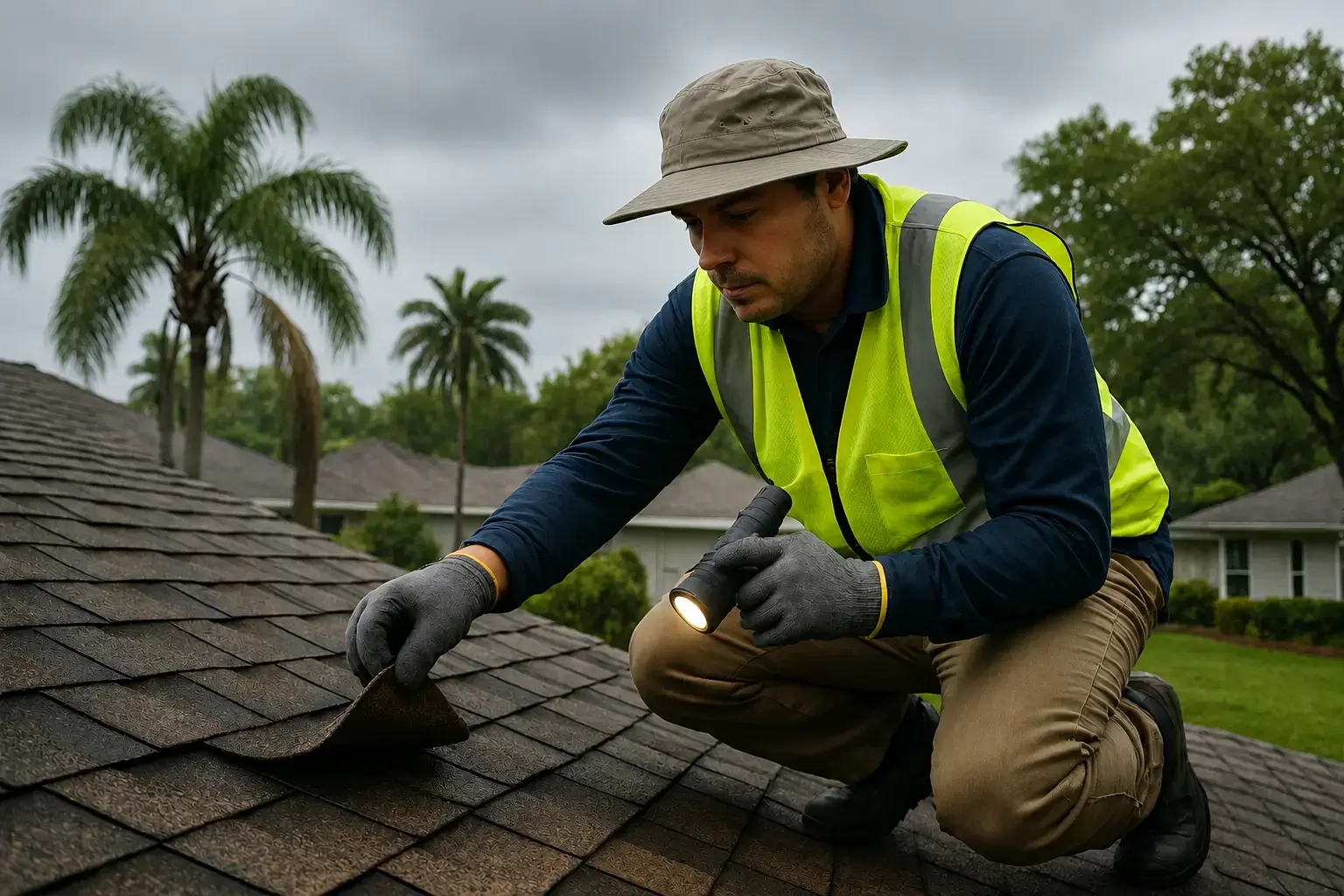
If you think a strong storm has passed through your area and caused roof damage, take some time to check for the obvious signs, like missing shingles along the roof’s edge or being torn off. Damage like this is easy to notice even if you don’t have a trained eye. Here’s a quick way to check things yourself from the ground and inside your home:
- Walk around your house and look up for missing or lifted shingles
- Check the gutters and downspouts for granule build-up
- Look for dents on gutters, vents, and flashing
- Head into the attic with a flashlight and look for water stains or daylight coming through
- Scan your ceilings inside for fresh water spots
Stay safe and don’t climb up on a wet or storm-damaged roof yourself. That’s a fall waiting to happen. Leave the up-close inspection to the pros who have the right gear.
When to Call a Professional Roofer
Not all roof damage is easy to see. Things like hail bruises, hidden leaks, and lifted shingles that resealed themselves can fool the untrained eye. When you’re not sure, it’s always smart to have a professional inspect your roof. A good roofer can catch small problems before they turn into a full roof replacement.
When that happens, reach out to us at Avatar Roofing in Tampa, FL. We’re your local storm-damage inspection and repair experts, and we understand Gulf Coast weather inside and out. Whether it’s a leaky shingle after a summer thunderstorm or serious hurricane damage, we’ll take a look, tell you straight what’s going on, and help you get it fixed right. Give us a call today to schedule your roof inspection before the next storm rolls in.
Frequently Asked Questions
What type of weather causes the most roof damage in Florida?
In Florida, high winds from tropical storms and hurricanes cause the most severe roof damage, followed close by heavy rain and water intrusion. Our Tampa Bay humidity and near-daily summer rain also wear shingles out faster than in drier parts of the country.
How can I tell if my roof has storm damage?
Look for missing, curled, or lifted shingles, granules piling up in your gutters, dents on flashing and vents, and water stains on your ceilings or in the attic. If you spot any of these signs after a storm, it’s a good idea to have a professional roofer take a closer look.
Should I get my roof inspected after every storm?
After a big storm, hurricane, or hail event, yes. Damage isn’t always visible from the ground, and catching it early keeps small issues from becoming costly repairs. We recommend Tampa homeowners get a professional inspection at least once a year and after any major weather event.
Does insurance cover roof damage from weather?
Most homeowners insurance covers sudden weather damage from storms, wind, and hail, but not damage from age or lack of maintenance. Having a documented professional inspection helps a lot when filing a claim. Avatar Roofing can inspect your roof and help you understand your options.