


If a big storm just rolled through Tampa and you are staring up at your shingles wondering, “Did the hail wreck my roof?”, you are not alone. Every rainy season we get calls from worried homeowners across the Bay Area asking the same thing. The tricky part is that hail damage to your roof isn’t always easy to spot from the ground, and lots of folks in Florida don’t even think about hail because we get way more wind and rain than anything else. But hail happens here too, and when it does, it can quietly chip away at your shingles for months before you notice a leak inside.
The good news is that a little know-how goes a long way. Below we’ll walk you through what hail damage actually looks like, what stuff gets mistaken for it, and when it’s time to call a pro. And since hail falls in random patterns, your house might be one of only a few on the block that got hit, so don’t assume you’re fine just because your neighbor is. Keeping your roof in good shape before the storm hits is the best defense, but once the ice starts falling, all you can do is check the damage after.
What Does Hail Damage to a Roof Actually Look Like?
Hail damage to your roof shows up in a few different ways depending on how big the hail was and how hard it was coming down. Some of it you can see, and some of it hides where you’d never think to look. Understanding both kinds helps you know whether you really need a roof repair or if things are okay for now.
Surface Signs on Asphalt Shingles
Most homes around Tampa have asphalt shingle roofs, and hail leaves some pretty telltale marks on them. Here’s what to look for:
- Round black spots where the protective granules got knocked off
- Small dents or divots pressed into the shingle
- Bruises that feel soft or spongy when you press on them
- Loss of those little protective granules, which you’ll often find washed into your gutters
Those granules matter more than folks realize. They shield the asphalt underneath from the brutal Florida sun, so once they’re gone, the shingle starts breaking down faster than it should.
Hidden Damage You Can’t See From the Ground
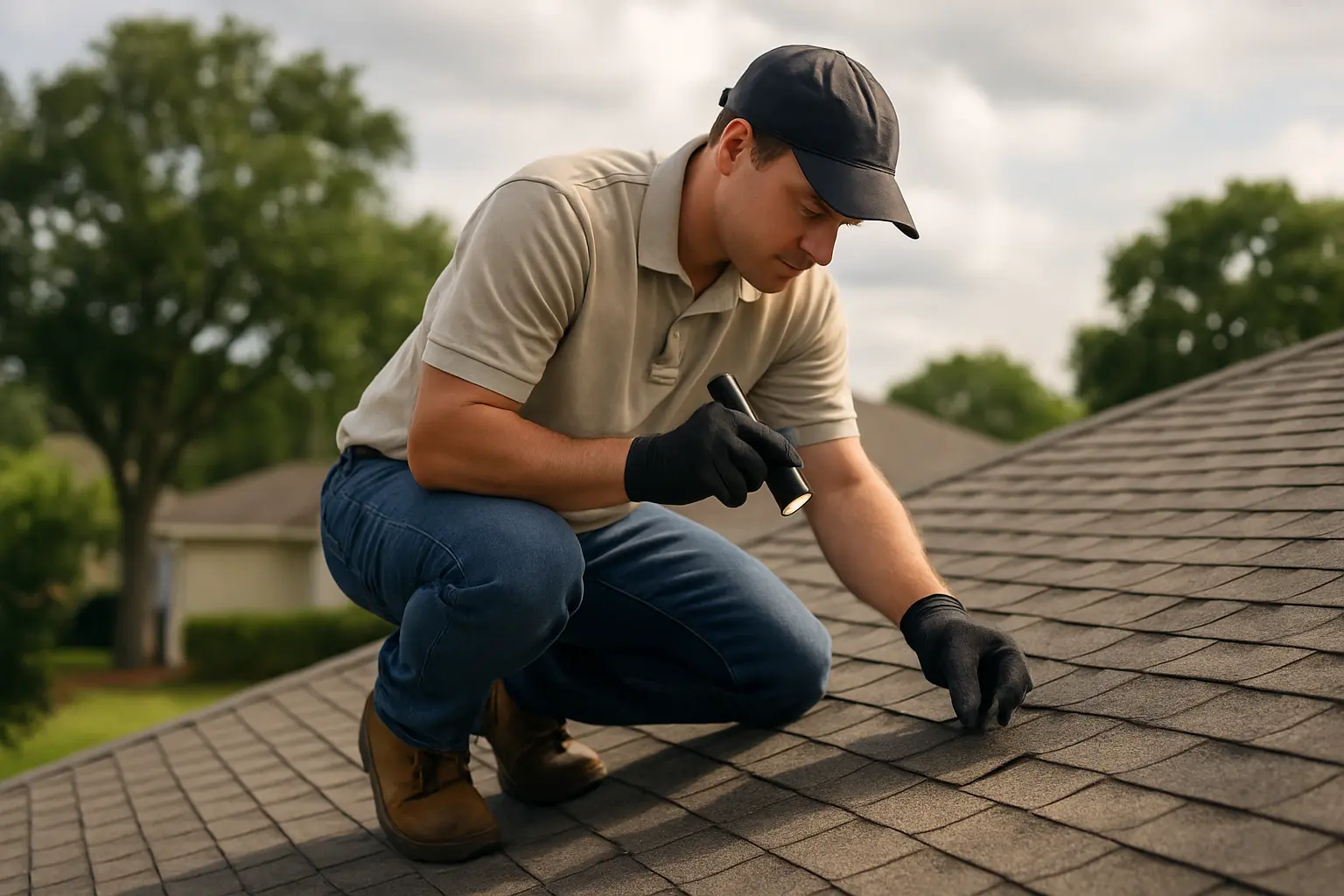
Here’s the part that catches people off guard. You won’t always know you need roof repair just by looking at the top of your shingles. A hard hail hit can split a shingle in a way you can only see from the backside. That means somebody has to actually lift and check each shingle one by one, which is another reason this job is best left to a pro. While you’re up there, it’s smart to check the other weak spots too, like your chimney caps and covers, the flashing, skylights, gutters, and roof vents. Those areas take a beating in a hailstorm and are common places for water to sneak in later.
Signs of Hail Damage Around Your Property (Before You Climb Up)
Before anybody gets on a ladder, take a slow walk around your yard. Your property gives you great clues about how bad the hail really was. If the ground-level stuff got hammered, chances are your roof did too.
Check Plants, Vehicles, HVAC Units, and Outdoor Furniture
- Plants and shrubs that are shredded or missing leaves
- Dented cars, trucks, or metal mailboxes
- Damaged HVAC units with dented fins or covers
- Dings or cracks in your outdoor furniture and patio stuff
If you see this kind of damage down low, take it as a warning sign. The same hail that dinged your grill probably did a number on your shingles too.
What Gets Mistaken for Hail Damage?
Properly figuring out what kind of roof damage you have is the first step in knowing what repair you actually need. Sometimes what looks like hail damage is really something else entirely, and that mix-up can cost you money or mess up an insurance claim. A few of the most common things people confuse with hail damage are:
- UV blistering, where our strong Florida sun causes the shingle to blister and crack over time
- Installation scuffing, marks that happened when the shingles were first put on
- Wind and flying debris damage, which can dent and tear shingles just like hail
- Plain old age, since worn-out shingles start looking beat up on their own
This is exactly why having a real roofing company inspect things matters. An experienced eye can tell hail bruising apart from sun blistering in about two seconds, where a homeowner might guess wrong and waste time.
Why You Should Leave Roof Inspection to a Professional
We always tell folks it’s best to leave this inspection to a trustworthy roof repair company. There are two big reasons. First is safety: roofs are slick and steep, and a lot of injuries happen every year from people climbing up after storms. Second is accuracy. A pro knows the difference between real hail damage and the imitation stuff, and they’ll document everything properly, which helps a ton if you file an insurance claim.
DIY Safety Guidelines If You Inspect Yourself
If you just have to take a look yourself, please be careful. Wait until the roof is fully dry, wear shoes with good grip, and use a sturdy ladder that somebody is holding at the bottom. Honestly, the best move is to check what you can with binoculars from the ground and leave the actual climbing to us. No shingle is worth a fall.
Cosmetic vs. Performance Damage: When Should You Repair Hail Damage?
One of the hardest calls is figuring out whether your hail damage is just cosmetic or if it’s actually hurting how your roof works. Unless you can literally see water coming through, it can be tough to tell. Cosmetic damage might just look ugly, while performance damage lets moisture in and shortens the life of your roof.
Why Granule Loss Matters Long-Term
Granule loss might seem minor, but it’s a big deal down the road. Those granules protect the asphalt from UV light, and once they’re gone, the shingle starts drying out and cracking. Left alone, that little bit of hail damage can spread until you’re looking at a whole new roof instead of a simple patch. Catching it early is way cheaper than waiting.
Repair vs. Replace: What Happens After the Inspection
Once we’ve identified what kind of damage you’ve got, we can give you a clear rundown and an honest estimate on the next steps of fixing or replacing your roof. A few scattered damaged shingles usually just means a repair. But if the hail hit hard across a big chunk of the roof, or your shingles were already old and worn, a full replacement might make more sense in the long run. We’ll never push you toward more work than you need; we just lay out the facts and let you decide.
How to Protect Your Roof Before the Next Storm
The hailstorm itself is out of your control, but the shape your roof is in when it hits is not. A well-maintained roof handles hail way better than one that’s already brittle and worn. Getting regular checkups, keeping your gutters clear, and staying on top of Florida rainy season maintenance all help. It also pays to understand what weather does to your roof over time so you know what to watch for. A little prep before storm season saves a lot of stress and money later.
Frequently Asked Questions
How long after a hailstorm should I get my roof inspected?
Sooner is better. We recommend booking an inspection within a week or two of the storm. Waiting too long lets small problems turn into leaks, and many insurance companies have time limits on when you can file a claim. Getting it looked at right away also means the damage is fresh and easy to link back to that specific storm.
Will insurance cover hail damage to my roof?
A lot of the time, yes. Most homeowner policies in Florida cover storm and hail damage, but every policy is different, so read yours or call your agent. Having a professional inspection with photos and clear documentation makes the whole claim process a lot smoother. We’re happy to help walk you through what we find so you can talk to your insurer with confidence.
How big does hail have to be to damage a roof?
It varies, but hail around one inch across, roughly the size of a quarter, can start causing real damage to asphalt shingles. Smaller hail can still knock off granules, especially on older roofs. Wind speed and the angle the hail falls at matter too, so even a short burst of smaller hail can leave marks worth checking out.
Can I file a claim if only cosmetic damage is present?
Maybe, but it depends on your policy. Some insurers cover cosmetic damage, and some specifically exclude it. Even if it looks cosmetic, remember that granule loss can slowly turn into a performance problem, so it’s worth having it documented either way. That way, if it gets worse later, you’ve already got a record of it.
Get a Professional Hail Damage Inspection in Tampa, FL
If a storm just passed through and you’re worried about hail damage to your roof, don’t sit and wonder. Early detection and quick repairs are the best way to keep a small problem from becoming a giant one. The team at Avatar Roofing has been helping Tampa area homeowners protect their homes for years, and we understand exactly what Florida storms do to local roofs. Reach out to us before the next storm rolls in and let us take a look so you can rest easy.
Picture Credit: iStock