


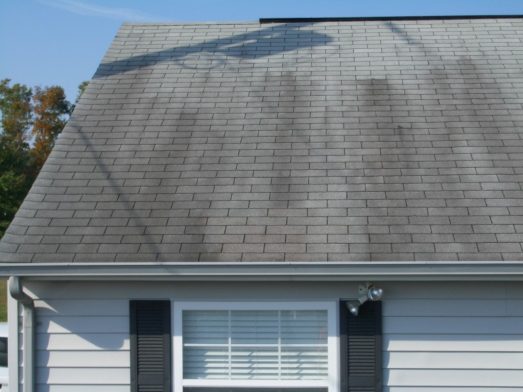
Mold can grow anywhere with excess moisture, including leaking pipes, damp basements, and roof surfaces. Algae has a dark green or black color and can break down shingles over time. This can damage the roof and make it look unattractive. Mold on shingles often appears as black stains. It is more common in hot, humid climates, but it can grow in many environments. Removing fungus, mildew, and stains from a roof is not easy. Many homeowners hire professional roofing contractors for this work. If you decide to handle it yourself, protect your property first. You should also gather the right tools and supplies. Learning how to remove mold from shingles can help, but hiring a professional contractor is often the safer option.
What Can Be Used to Remove Mold?
A simple bleach solution can typically be used to eradicate mold from roof shingles. Bleach, unfortunately, is hazardous to plant life, including grass, that encircle your home. Because the bleach solution will most likely run down the roof and into the land below, it’s critical to take the necessary steps to safeguard your property from the bleach’s effects. Plastic sheets should be used to protect plants, equipment, furniture, etc., in your yard. Using tarps to cover the grass will also prevent the bleach solution from absorbing into the soil. If this isn’t possible, just sprinkle water on the grass as well as plants, to assist in reducing the bleach’s impact.
Proper Way to Use Bleach Solution to Remove Mold
Mix equal parts chlorine bleach and water in a clean pail. Wear rubber gloves and a breathing mask for protection. Add one spoonful of trisodium phosphate to the bleach solution. Then, pour the solution into a pump sprayer. Spray the roof shingles generously with the solution. Let it soak for at least 15 minutes. Heavier mold growth may need more time. Rinse the shingles with a low-pressure garden hose. Start at the top of the affected area and work downward. Check the shingles with gloved fingers. If you still feel slime, apply the bleach solution again. Let it sit for another 10 minutes, then rinse the roof once more.
What Can Be Done to Prevent Return of Mold?
To prevent further growth of algae and moss, you’ll also want to conduct a few key maintenance tasks. Trim tree limbs to permit direct sunlight to reach your roof. Mold has a harder time growing in this environment. Clear away debris that collects on your roof routinely, including twigs and leaves. Debris can unfortunately absorb and trap moisture.Clean your gutters regularly to ensure proper water drainage.To avoid moss as well as algae growth, you might want to think about applying strips of zinc to your roof. If you choose to replace your roof, consider purchasing algae-resistant asphalt shingles.
What Precautions Should be Taken?
To prevent additional damage, follow specific safety steps. Avoid using a pressure washer because it can remove granules from the shingles. This can expose your roof and make it more vulnerable to mold growth. Never attempt roofing projects alone. Climbing on a roof is dangerous, so hire a trained and reputable professional for the job.
If you’re ready to replace your roof and you are looking for the best roofing contractor in Tampa, contact us via email or via phone at 813-962-7663.