
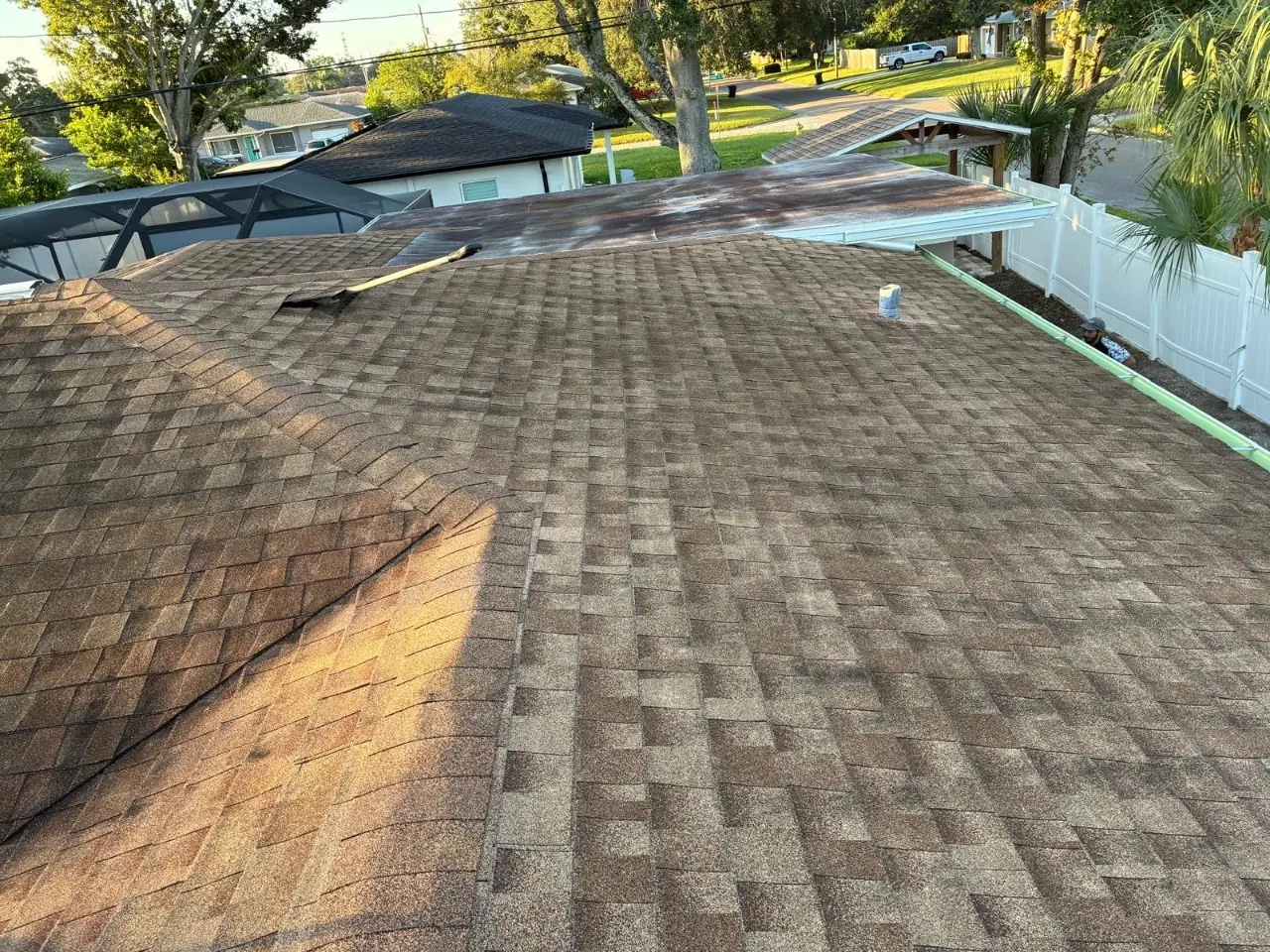
A recent residential roofing project on 25th Ave N in St. Petersburg demonstrates how multiple roofing systems can be integrated to support durability, visual consistency, and weather resistance. This property required both sloped and flat roof solutions, making it a strong example of how material selection and installation methods work together across different roof planes.
Addressing Mixed Roof Design Challenges
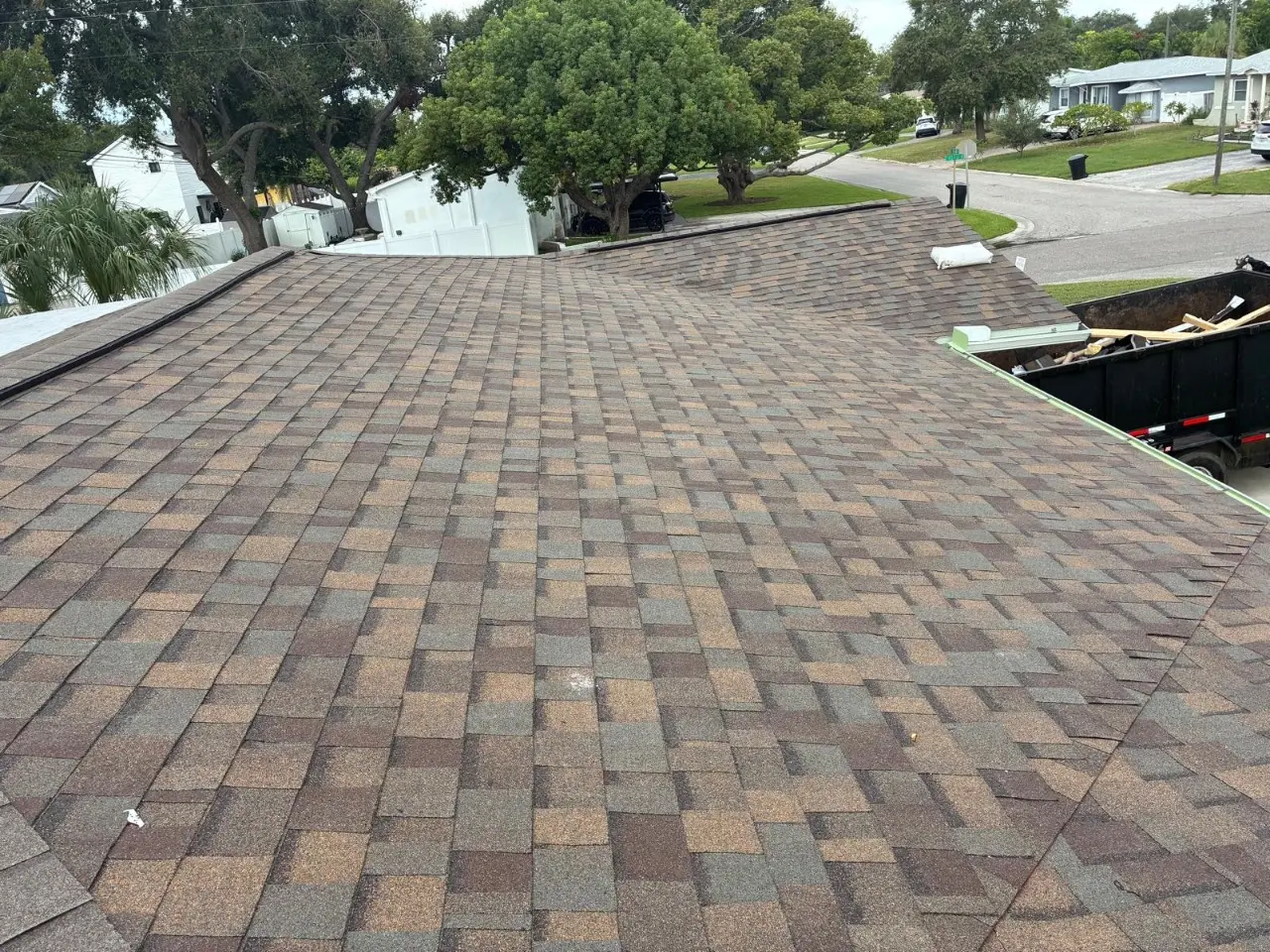
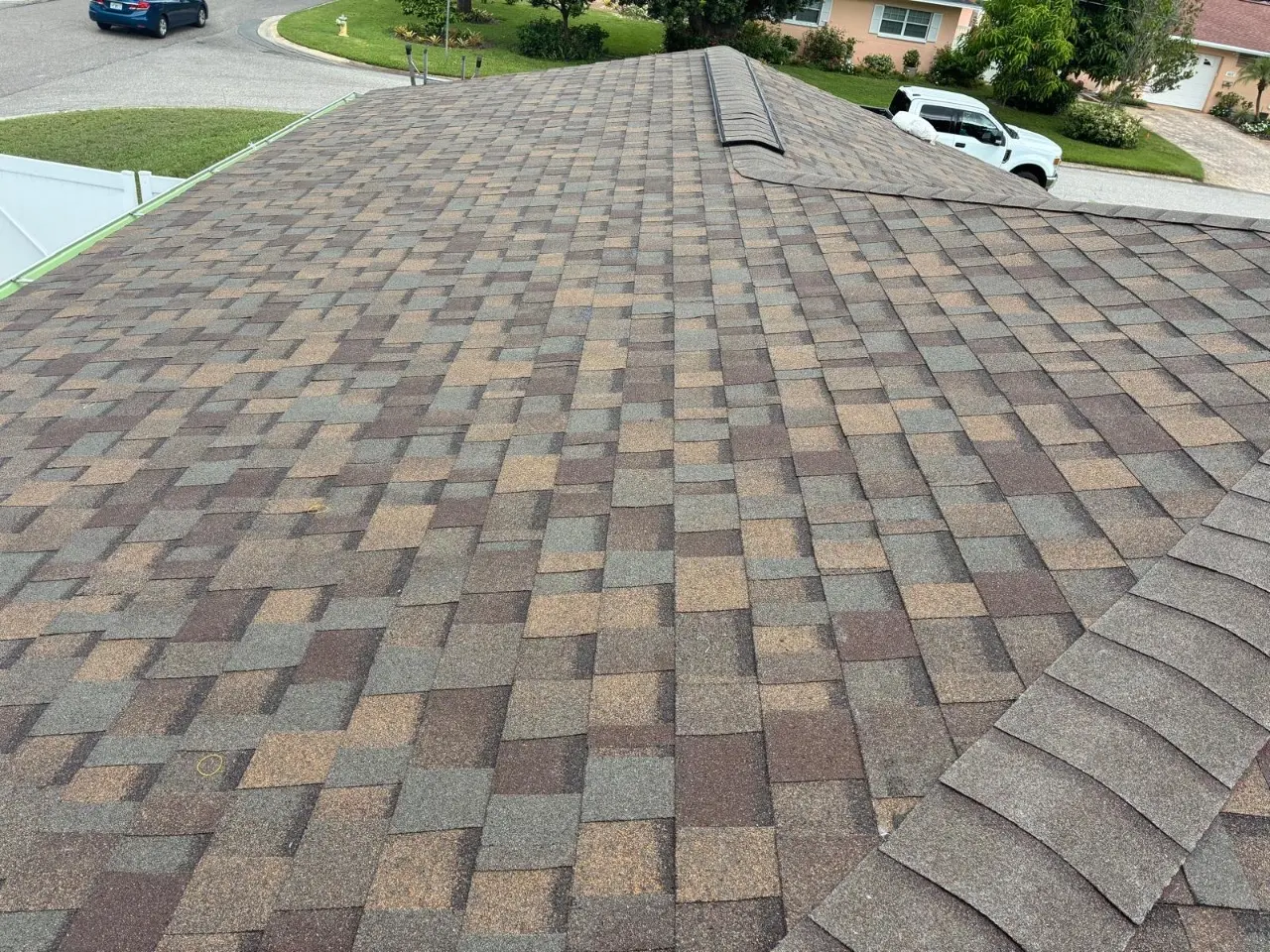
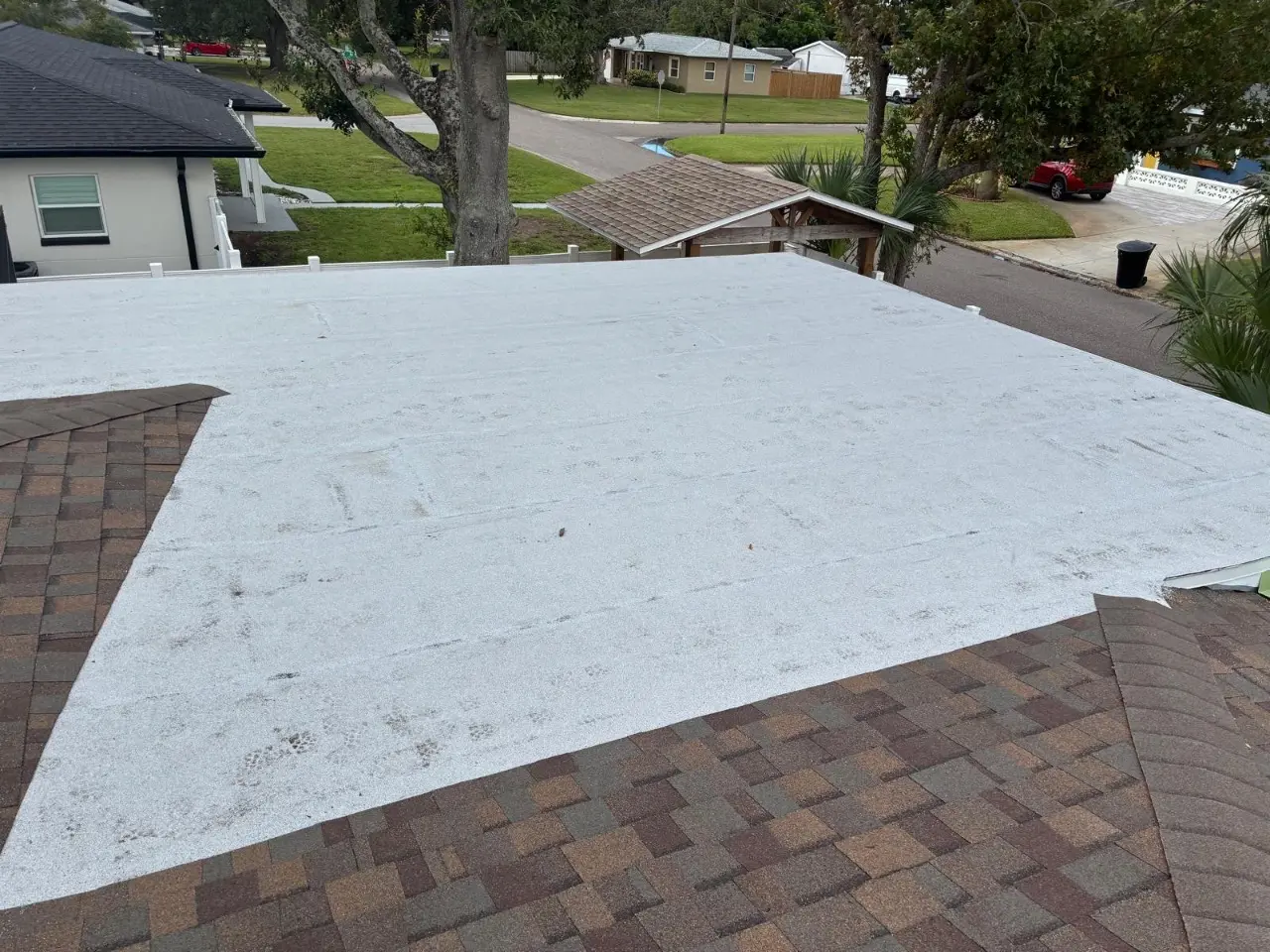
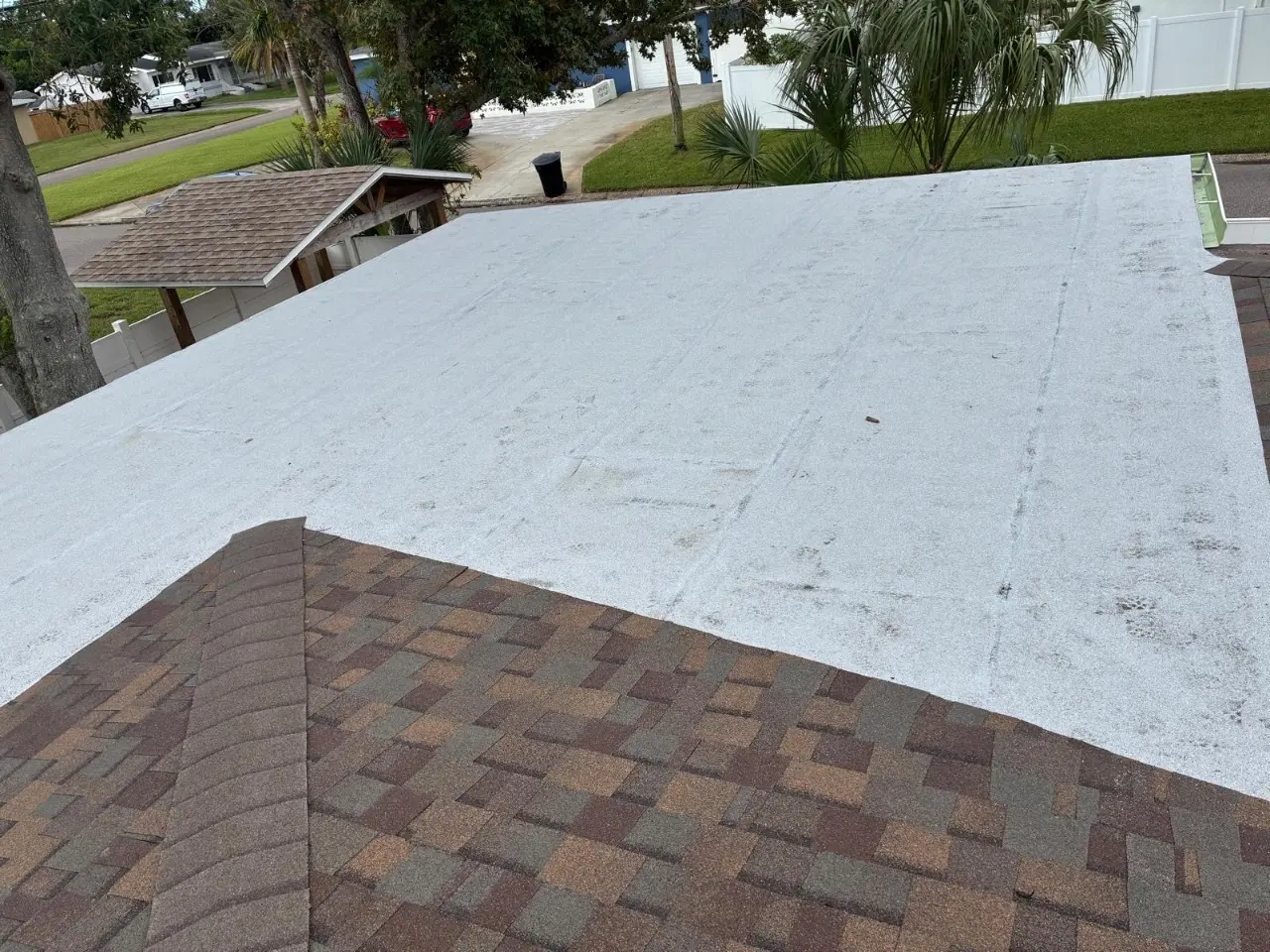
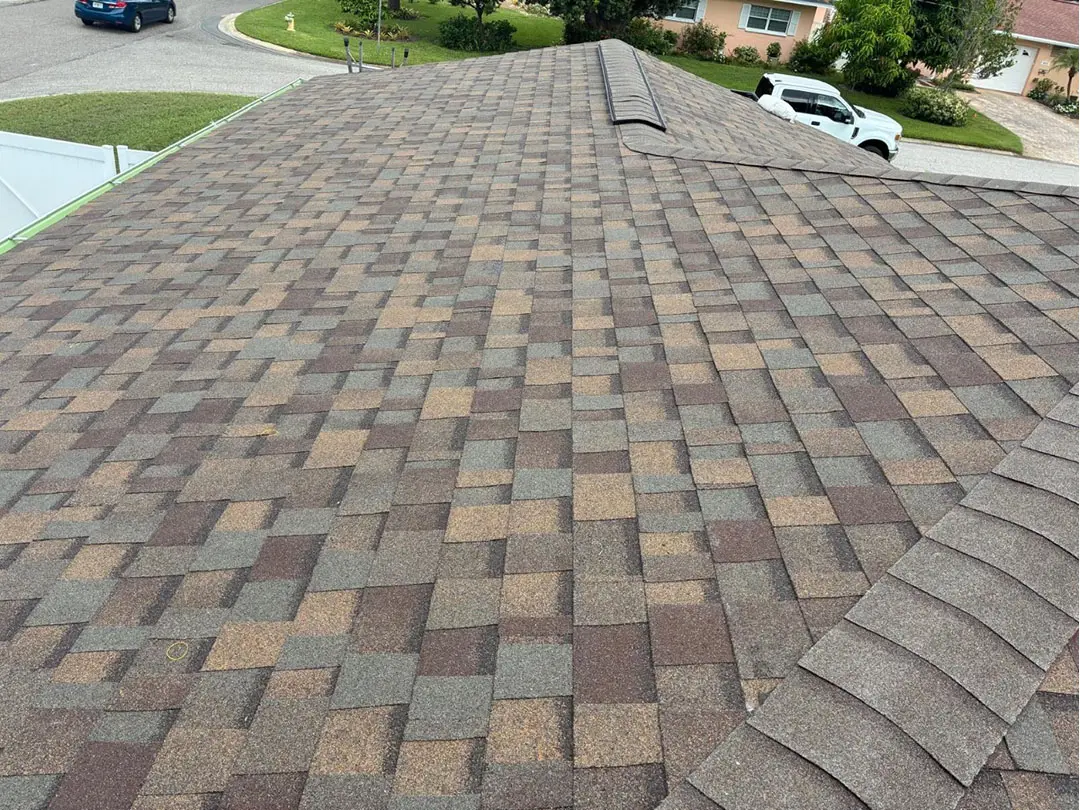
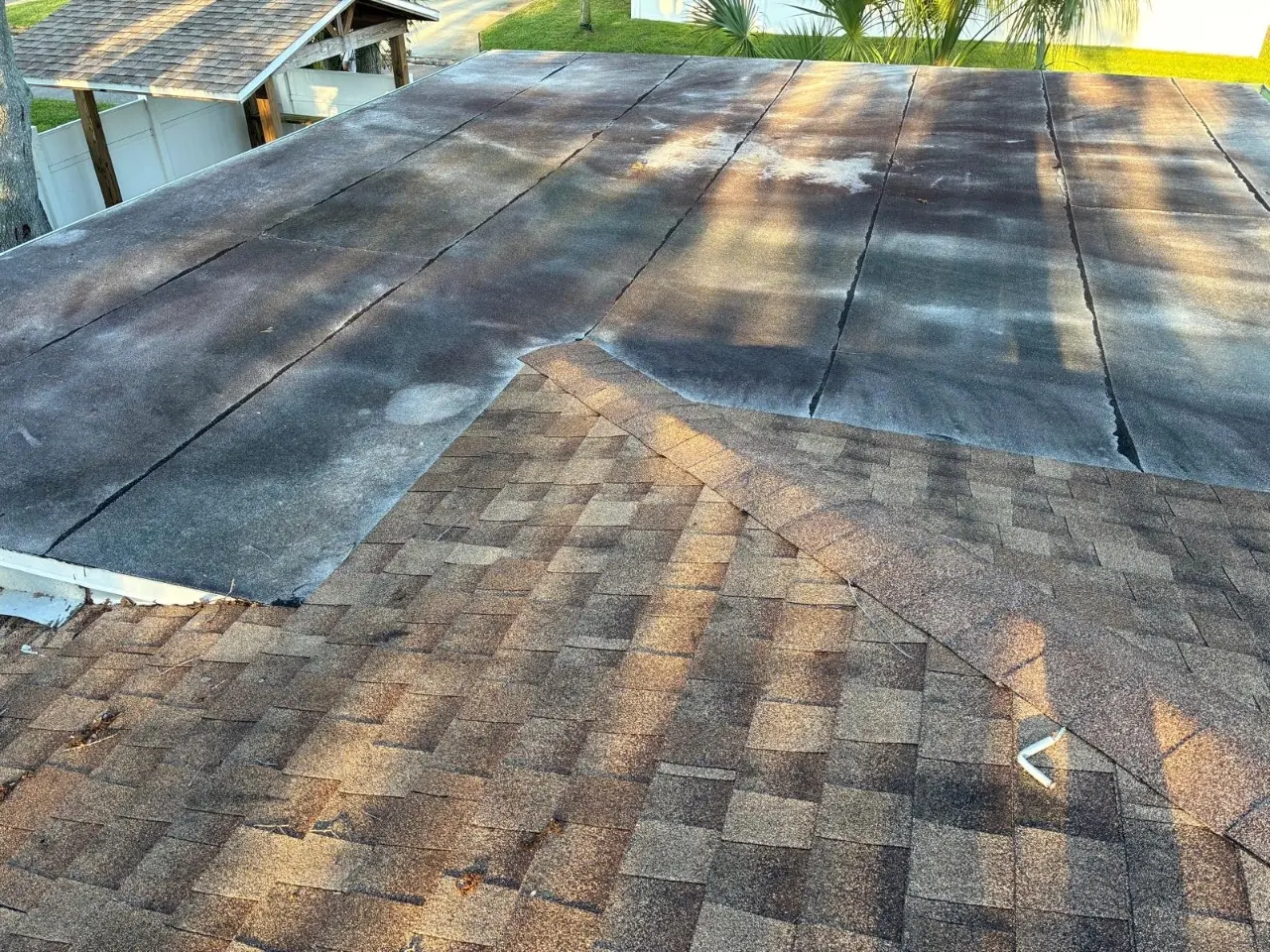
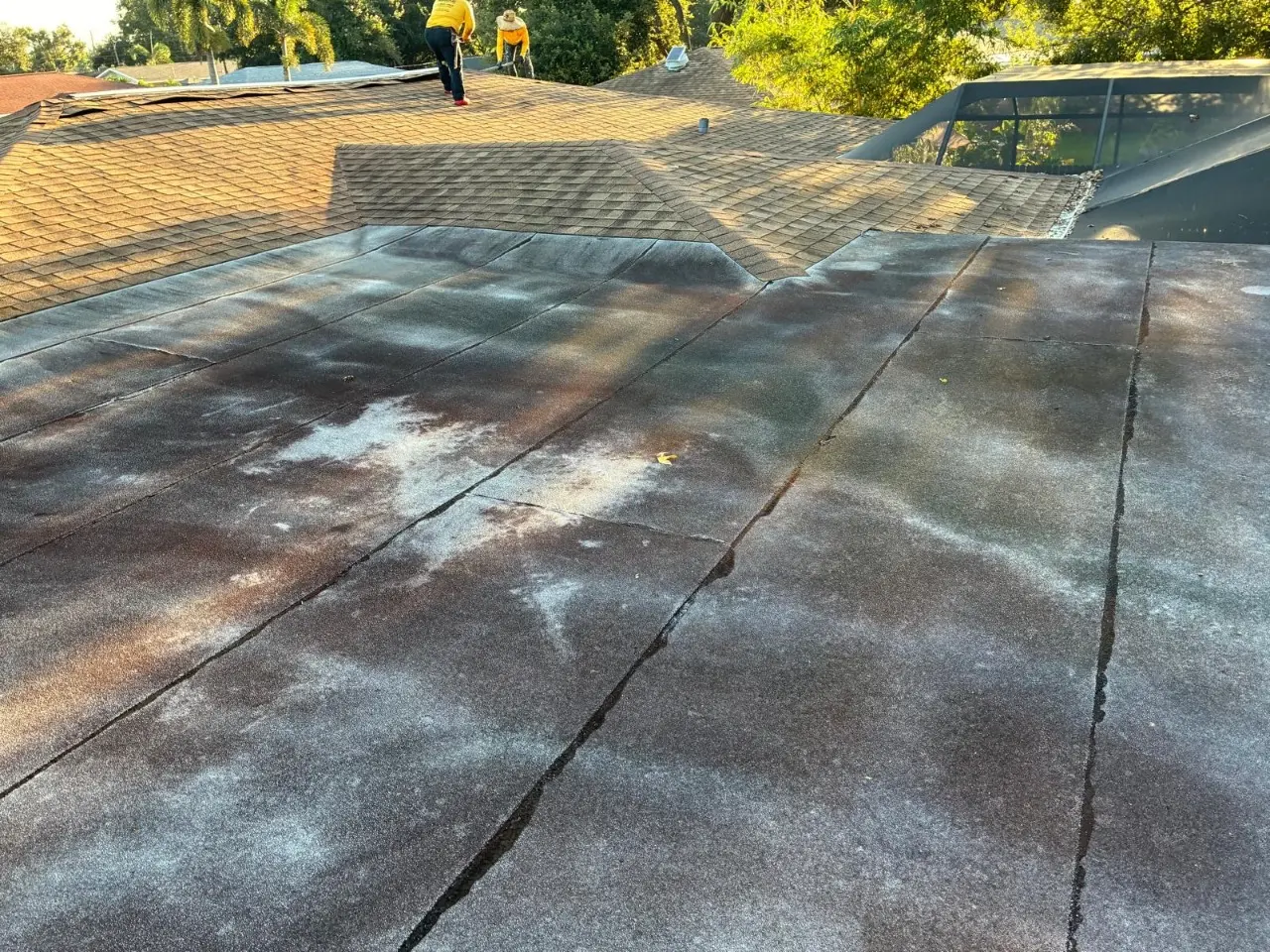
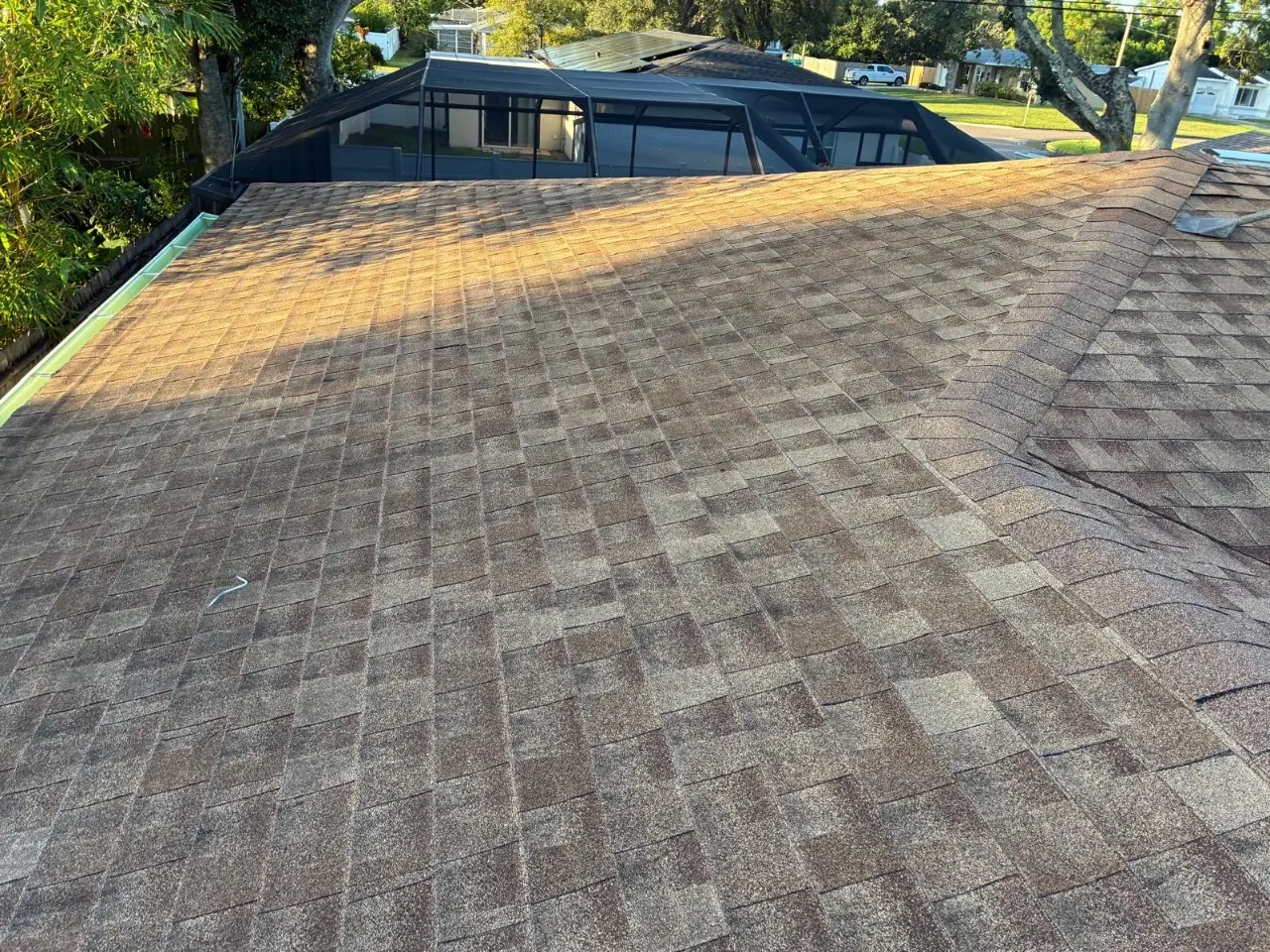
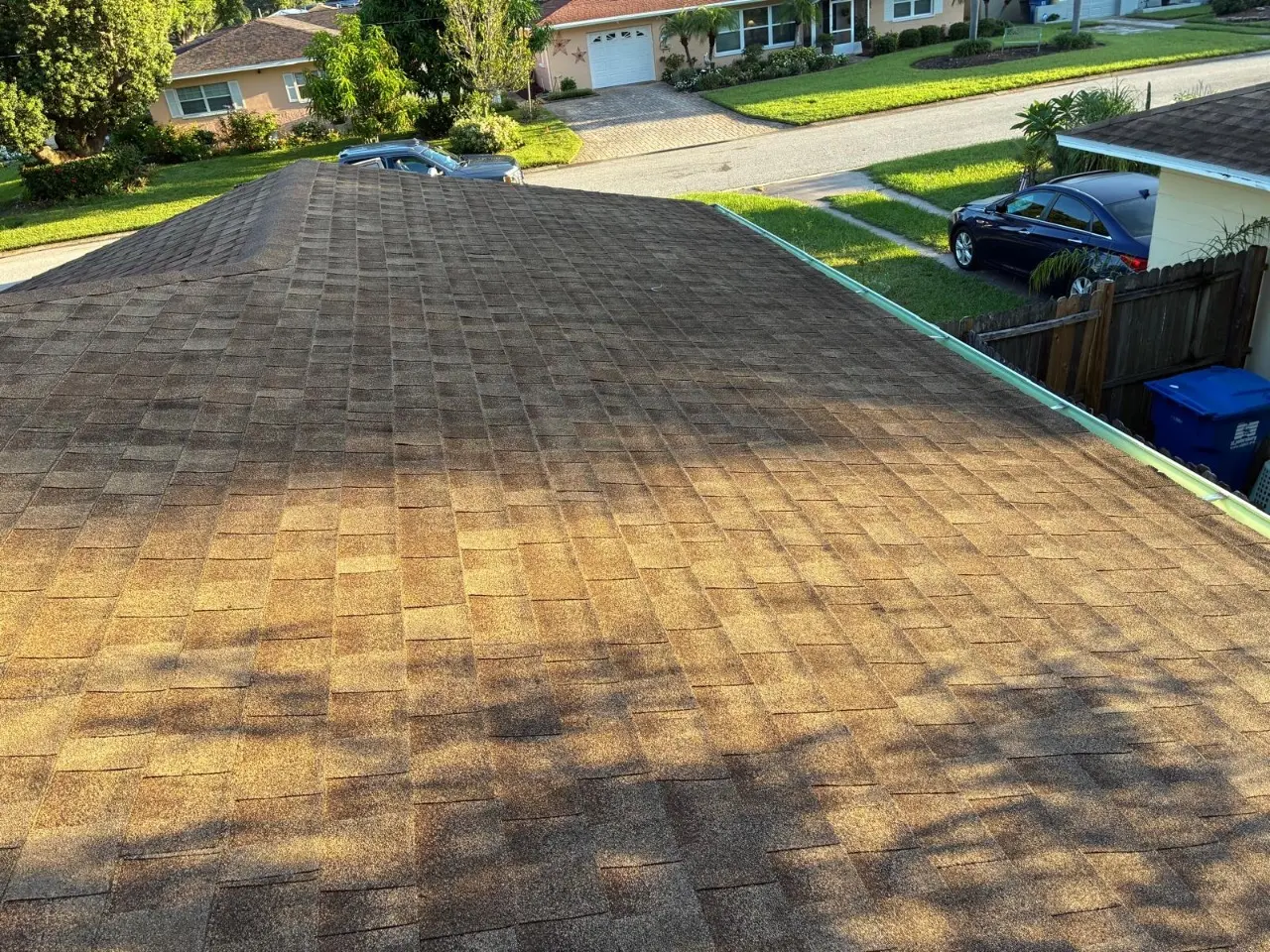
Houses with differently shaped roofs often require more than one roofing type. In this case, 27 squares of Teak Owens Corning Duration shingles were used to finish the sloped parts. These architectural shingles add depth and a color that complements the neighborhood. Six squares of white modified bitumen were used to finish the flat roof sections. This material was chosen because it works well on low-slope surfaces.
It was important to ensure the transitions from the flat roof to the shingle roof were smooth. Correct detailing at these intersections helps control water flow and reduces the risk of moisture infiltration over time. The finished roof looks appealing as a whole and meets the needs of different structures.
Shingle Installation with Consistent Coverage
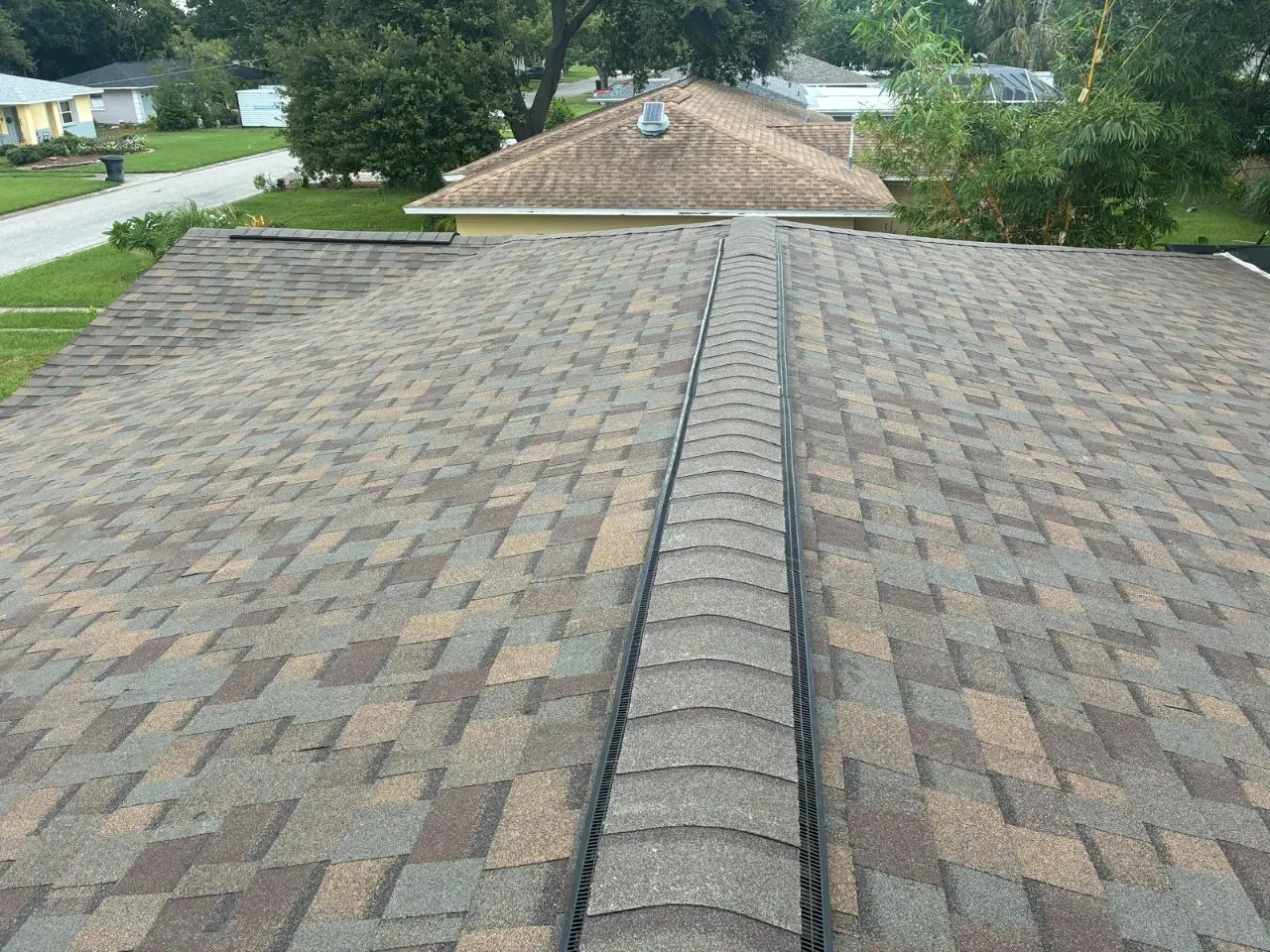
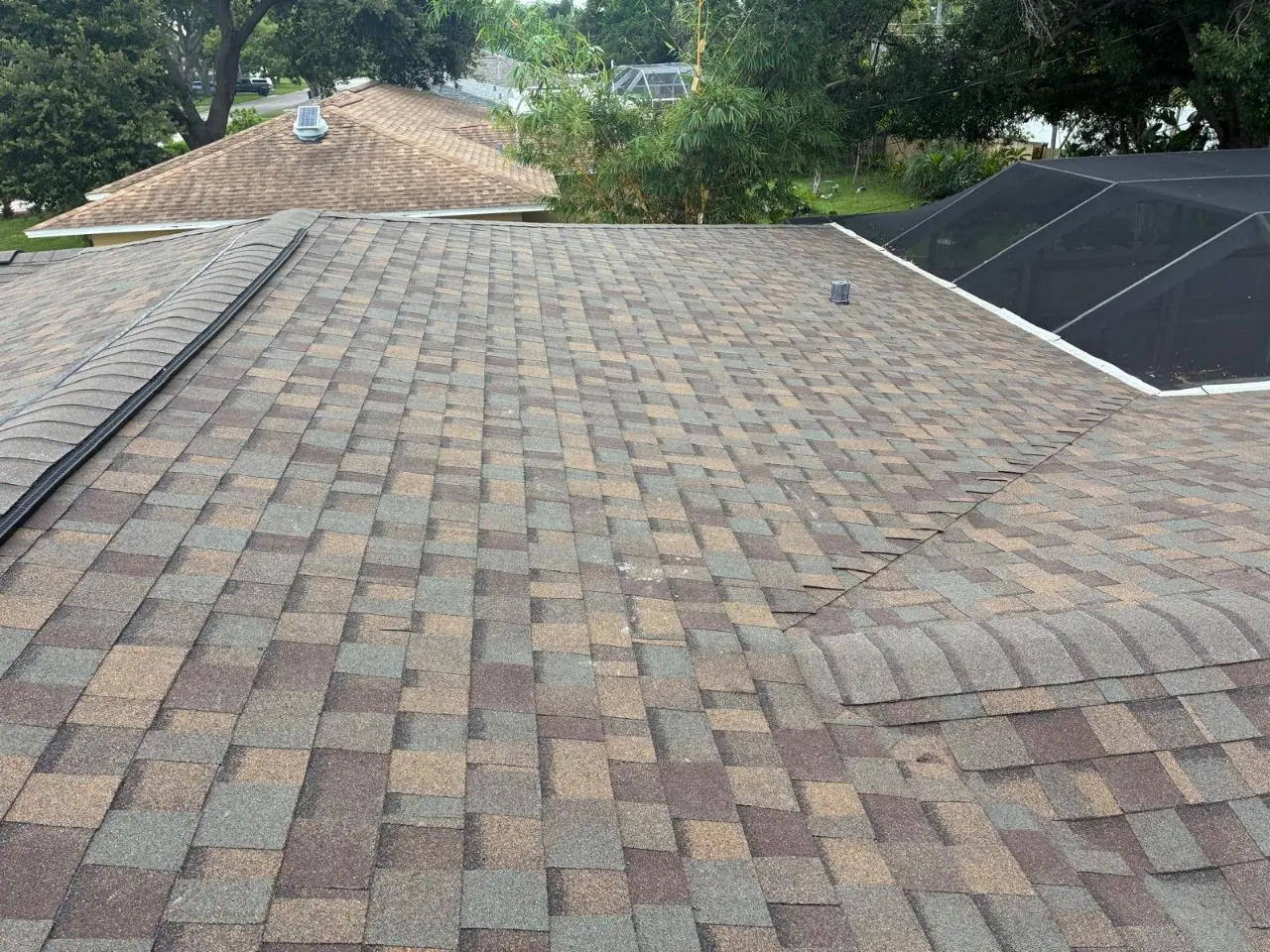
The shingle areas line up evenly, and the ridges look clean. Owens Corning designed Duration shingles to stay securely in place and provide strong surface coverage, which helps them resist wind and last longer. The Teak color adds depth without making the home’s exterior look too busy, giving it a refined and welcoming appearance.
They made sure the ridge caps were even and the vents were in the right place. These features help keep air moving under the roof, which can help keep the heat down in places like St. Petersburg, where it’s hot.
Flat Roof Protection with Modified Bitumen
The crew finished the flat roof sections with white modified bitumen, a strong choice for low-slope roofs. The light color reflects sunlight, while the smooth, sealed surface helps water drain properly. This combination improves thermal performance and keeps the surface more stable in areas with heavy direct sunlight.
The modified bitumen application has even coverage and clean edges, especially along parapets and roof sections that are next to each other. These details help ensure performance stays the same even when it rains heavily.
A Unified Roofing Result
This project shows how careful planning and precise installation can combine different roofing systems into a single system. Each part of the building, from the architectural shingle slopes to the flat roof surfaces, was chosen and assembled to perform its specific role within the whole building.
Homeowners considering similar roof configurations can benefit from working with experienced professionals who understand both material performance and installation accuracy. To learn more about residential roofing services and completed projects, visit Avatar Roofing.